Key Message from Closed-Door Roundtable on Public Housing
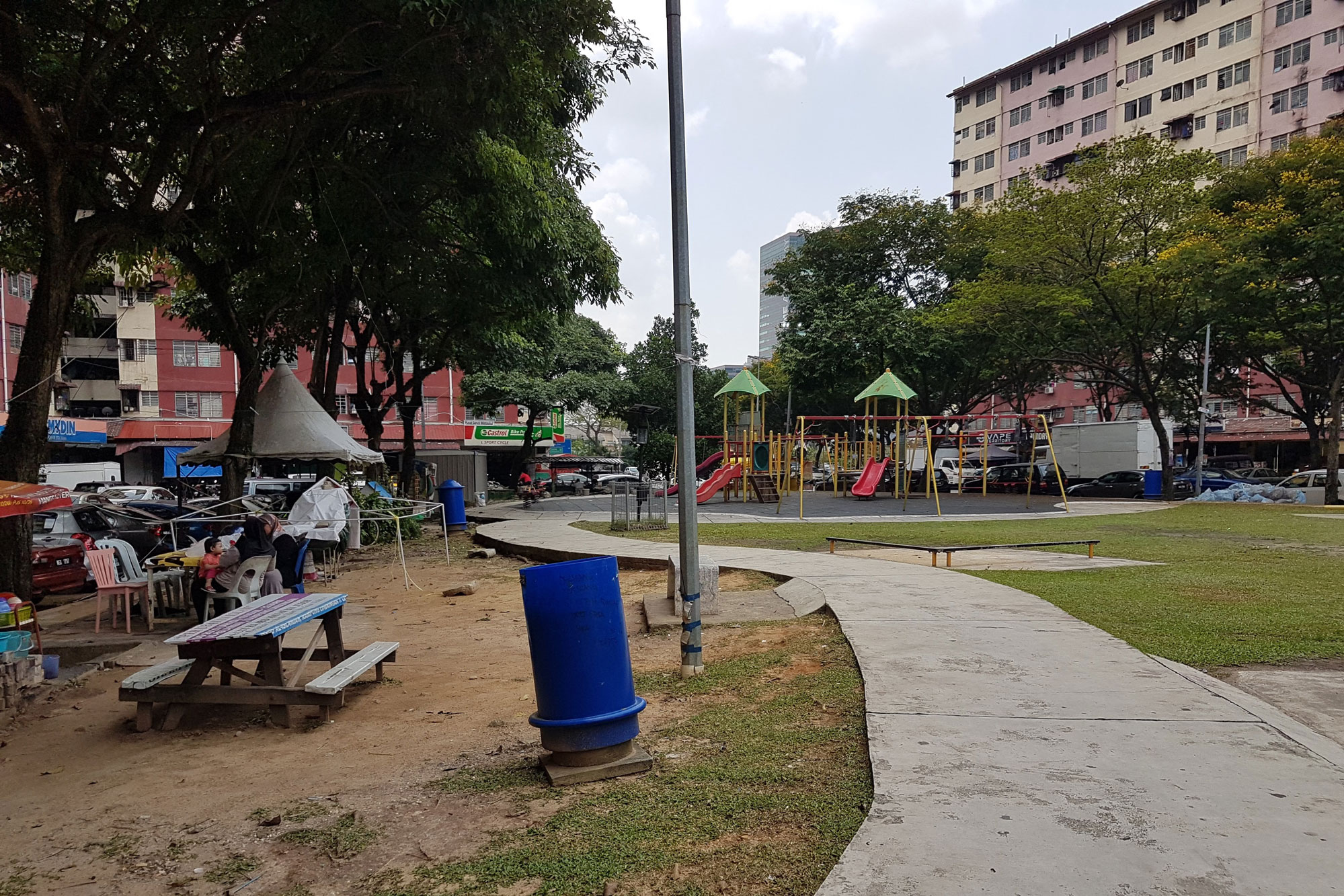
On 5 August 2021, the World Bank and Think City organised a Closed-door Roundtable on Public Housing. The Roundtable was anchored on a 20-minute presentation entitled, “Will the Projek Perumahan Rakyat (PPR) become an urban poverty trap?”, which outlined the worsening situation at the PPR (People’s Housing Projects) and explored possible solutions to reverse their declining physical, social, and economic conditions. The presentation was then followed by an hour-long discussion to generate debate and consensus, and identify appropriate policy interventions.
The Roundtable attracted participation from key stakeholders, all of whom are development practitioners, with an interest in the sustainability and performance of the PPR1. Overall, there was a broad consensus on the following key issues:
- Malaysia has achieved tremendous success in arresting the growth of slums as a result of rapid urbanization by providing housing for the urban poor. It is estimated that 160,000 households or a population of 800,000 people reside in about 300 PPRs nationwide.
- While Malaysia has been successful in ensuring access to housing for the urban poor, the persistent liveability challenges in the PPR threaten to undermine the development dividends of public investments in housing, leading to declining living standards for the communities. For instance, the incidence of internal parasitic infections (IPI), which dropped dramatically between the 1970s and 2013 (from as high as 95% to a low of 5.5%), has now increased to 22.4% at sample PPRs in a recent 2020 study.2
- The reduction in standard of living stems from key weaknesses in the overall management system of the PPR, which manifests in the physical, economic, and social decay of the PPR and its communities. Such a process of decay is recognised in the literature as Ghettoization. Left unattended, the Ghettoization process will trigger the territorial stigmatization of neighbourhoods and blight the sustainability of Malaysia’s rapidly growing cities.
- The Covid-19 crisis has accelerated the slide in the standard of living and increased the stress levels of PPR communities. There is an urgent need to provide support to soften the impact of Covid-19 on the PPR community. Such support must focus on targeting the most vulnerable through provision of nutritious food to address hunger and stunting, educational and learning support for school-going children, fixing priority infrastructure, family support services to reduce household stress, and enhancing household income, among others.
- In addition, a medium-term program is needed to arrest the slide in living standards and inject a new upward momentum that focuses on strengthening the overall PPR management system. This new management system will involve the co-management of the PPR by communities, upgrading of existing PPR infrastructure, implementation of social accountability for service delivery and critical policy reforms to address sustainability.
The Roundtable also identified key pathways of improvement in public housing policy and implementation. Below are some recommendations:
Immediate and short-term
- To accelerate short term interventions addressing the impact of Covid-19, specifically livelihoods, healthcare, nutrition, learning and play areas through public-private partnerships whereby private sector can allocate provisions through their Corporate Social Responsibility funding to adversely affected PPRs, executed by federal agencies or community development organisations. In addition, existing government programs that address livelihood building and income recovery such as localised jobs matching and skills grant should be linked to the PPR communities.
- To expand existing pilots undertaken by community development organisations at PPRs that address key learnings to inform a broader policy decision making and implementation. This serves as an opportunity for PPRs with successful programmes such the K2K Aktif Bersama (promoting healthy lifestyle and wellbeing) and K2K Idol (reducing community stress and connecting neighbours) to scale up while building the capacity of Government agencies and other NGOs to extend and deepen their engagement with PPRs.
- To continue upgrading existing PPR infrastructure and continuous maintenance such as common facilities, playgrounds, solid waste management, improving lighting to enhance community safety, improving ventilation and lift maintenance. The prioritization of such activities needs to be conducted with the meaningful participation of PPR communities.
- To rapidly map out the degree of Ghettoization across all PPRs and document the multiple support activities currently being carried out by government agencies and non-government actors (NGOs, private sector) for PPRs. This mapping and associated database will provide useful information to support new policy formulation and enhance the overall PPR management system
Medium-long term
- To undertake deeper analytical studies that explore sustainable models of public housing in Malaysia with a new shift of emphasis from access to public housing towards quality of public housing and building strong communities amongst the B40. A stronger focus on liveability and lifting the standard of living of communities will need to be accompanied by the development of measurable and meaningful indicators and management tools.
- Explore better financing models to ensure built quality and PPR life-cycle sustainability. Land identified and allocated for new built must have ease of access to services and socioeconomic opportunities. As a new generation of public housing is being built, it needs to take on the lessons learned and avoid the mistakes of the past, striking a balance between building and fostering physical and social infrastructure.
Acknowledgement
We would like to convey our gratitude to participants who attended the closed-door roundtable, thus presenting the opportunity for us to submit these findings for consideration. The Roundtable was conducted via the Chatham House Rules therefore findings are aggregated.
For further information on the Roundtable, please contact Khairiah Mokhtaruddin (khairiah.mokhtaruddin@thinkcity.com.my / 012-3267535)
Date: 5 September 2021
