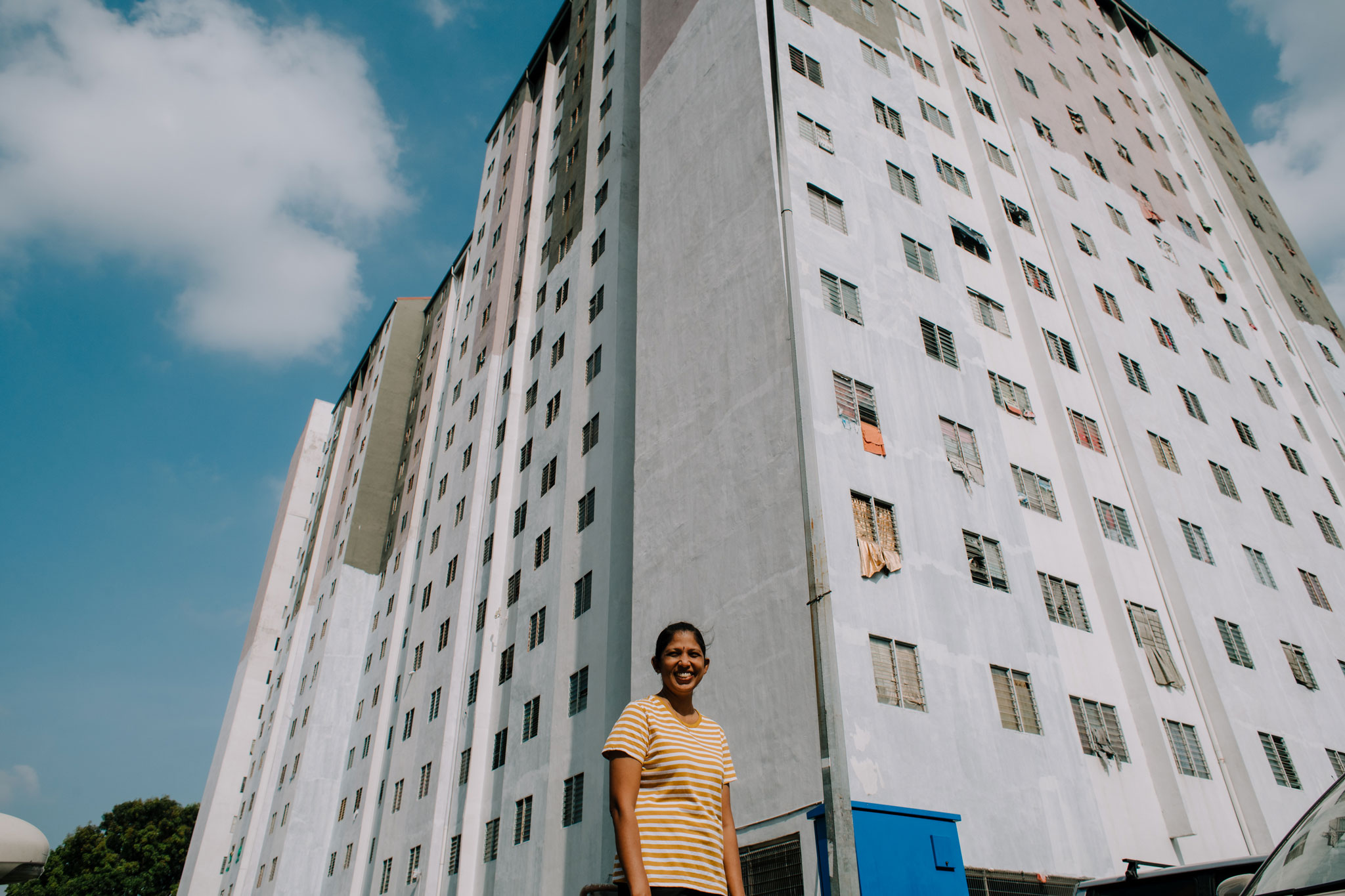
Executive Summary
Public housing has been part and parcel of Malaysian development ever since the country gained its independence in 1957. Thereafter, the Federal government has spearheaded many initiatives and programmes to provide low-cost housing for citizens throughout the decades. These programmes are part of the National Housing Policy that successfully housed the urban poor and almost eradicated urban slums. While providing access to public housing has been a significant step, it is now time to strengthen the human dimension of public housing. Liveability, social cohesion and stronger participation in management will contribute to more sustainable, inclusive housing solutions and mitigate the risk of public housing turning into vertical slums.
The disruptions caused by the COVID-19 pandemic have highlighted and worsened the daily struggles of public housing residents. By revealing the visible cracks in the status quo of public housing in Malaysia, the pandemic has provided policymakers with opportunities for change during COVID-19 recovery. Therefore, the time is right to strengthen policy and action on improving public housing liveability. In other words, turn public housing into public homes.
Issues and Challenges in Malaysian Public Housing
Although Malaysian public housing programmes are often presented as success stories of squatter resettlement and housing the poor, the programmes are becoming unsustainable. The improvements in the residents’ living standards and health have been short-lived, as their environment has become dilapidated, social structures have fallen apart and economic prosperity has been eroded. The issues faced by the public housing residents include feeling unsafe in their homes; poor livelihood and living standards; deterioration of health and quality of life; no sense of community; and substandard management of their housing complexes.
These issues are exacerbated by the COVID-19 pandemic, exposing their vulnerability. The government’s Movement Control Order (MCO) in 2020-21, enforced to curb infection, had a disproportionately negative impact on most public housing communities that were already struggling to make ends meet. The primary concern is to prevent the public housing complexes (PHCs) from turning into urban ghettos, as we can see in many developed countries, such as the United Kingdom, the United States and France.

Gaps and Lessons Learned
The current public housing model cannot resolve the issues faced by its residents. These include funding for maintenance and a management system where upward accountability exists. As a result, residents are left without any meaningful decision-making power to look after their living environment.
- Vulnerability
The economic situation, coupled with the lack of social protection among the urban poor communities living in low-cost housing, makes them vulnerable to economic shocks and other crises. In parallel, the dilapidation of the housing blocks also affects the quality of life of the public housing communities.
- Sustainability
While the main issue is maintenance and upkeep, there are also flaws in the initial planning which include building design, substandard construction materials, and unsuitable locations caused by poor financing, lack of funds, or cost-cutting measures.
- Fragmented Governance, Paternalistic Management
There is a disconnect between the management’s view and the lived reality as experienced by the residents. A power imbalance from the vertical governance structure of public housing projects has resulted in poor service delivery and upkeep. Furthermore, government agencies and management companies in charge of managing PHCs operate in a paternalistic environment where residents are seen merely as welfare recipients. This can manifest itself in the community being excluded from decision-making, resulting in a lack of ownership and belonging, which is likely to lead to less care being taken.
- Lack of Resident Participation
While some community organisations exist, there is a lack of clear participatory governance structures and downward accountabilities. Without a substantial effort to include all segments of the public housing community, the opportunity to develop community leadership by identifying community-relevant solutions and their management may be lost.
- Bottom-up Initiatives
Despite the challenges outlined in previous points, natural leaders emerge in the housing community, kick-starting various initiatives grounded in local needs. We found that rather than supporting this self-help approach demonstrating the community’s resilience, it is often not recognised or even suppressed.
Recommendations
This paper proposes the following recommendations to steer Malaysia’s PHCs away from the current trajectory where residents are stuck in a cycle of marginalisation, impoverishment and social exclusion. The following recommendations require further investigation and coordinated effort from multiple stakeholders:
- Improve social protection
- Accelerate short-term interventions addressing the impacts of COVID-19
- Expand and link existing pilot projects undertaken by community development organisations
- Build capacity of community leaders and participatory structures
- Develop indicators to assess the liveability of the PHCs
- Continue upgrading existing public housing infrastructures
- Explore better financing models to ensure quality of built structures and life-cycle sustainability
- Provide more analytical work on the public housing ecosystem
- Develop a body to consolidate all the work on public housing
While the recommendations are targeted at policymakers and stakeholders who have the means to institute the proposed changes, it is important not to lose sight of what these changes mean for residents on the ground. This linkage of what is recommended and why it is recommended based on the views of residents helps put the proposal in perspective.
